Ask most kids what they’re looking forward to at a big youth baseball tournament, and you’d expect answers like hitting dingers, winning a championship, or hanging out with teammates.
But ask any player headed to Cooperstown Dreams Park, Ripken Experience, or one of the country’s biggest travel baseball tournaments, and there’s a good chance you’ll hear something else first:
“Can’t wait to trade pins.”
For many young players, pin trading has become just as memorable as the games themselves. Walk through the barracks at Cooperstown or around the fields at a major USSSA or Perfect Game event, and you’ll see kids carrying backpacks, pin towels, or lanyards covered with colorful enamel baseball pins. Everywhere you look, players are asking the same question, “Want to trade?”
It’s become one of the most unique, and surprisingly important, parts of the youth baseball experience. And why parents are opening their checkbooks more and more for these tiny metal keepsakes.
A Tradition That’s Bigger Than Baseball
Trading pins aren’t exactly new, but they’ve exploded in popularity alongside the rise of travel baseball over the past couple of decades.
Youth baseball has changed dramatically. What used to be a local Little League season has evolved into year-round travel teams, destination tournaments, and family vacations built around the sport. Teams routinely travel hundreds of miles for weekend events, while many families spend an entire week at bucket-list destinations like Cooperstown Dreams Park in upstate New York or the Ripken Experience in Myrtle Beach and Pigeon Forge.
Those tournaments aren’t just about baseball anymore; they’re sold as once-in-a-lifetime experiences for the kids. And trading baseball pins has become one of the traditions that makes those experiences unforgettable.

At Cooperstown especially, trading pins is practically part of the tournament’s DNA. Thousands of players from across the country arrive with custom team pins, and trading starts almost immediately. Kids swap pins in the dining hall, outside the barracks, between games, and even late into the evening after the day’s schedule has wrapped up.
Today’s Pins Are Pretty Incredible
Forget the simple team logo pins from years ago. Modern trading pins have become miniature collectibles. And the popularity has led to an arms race of sorts between teams.
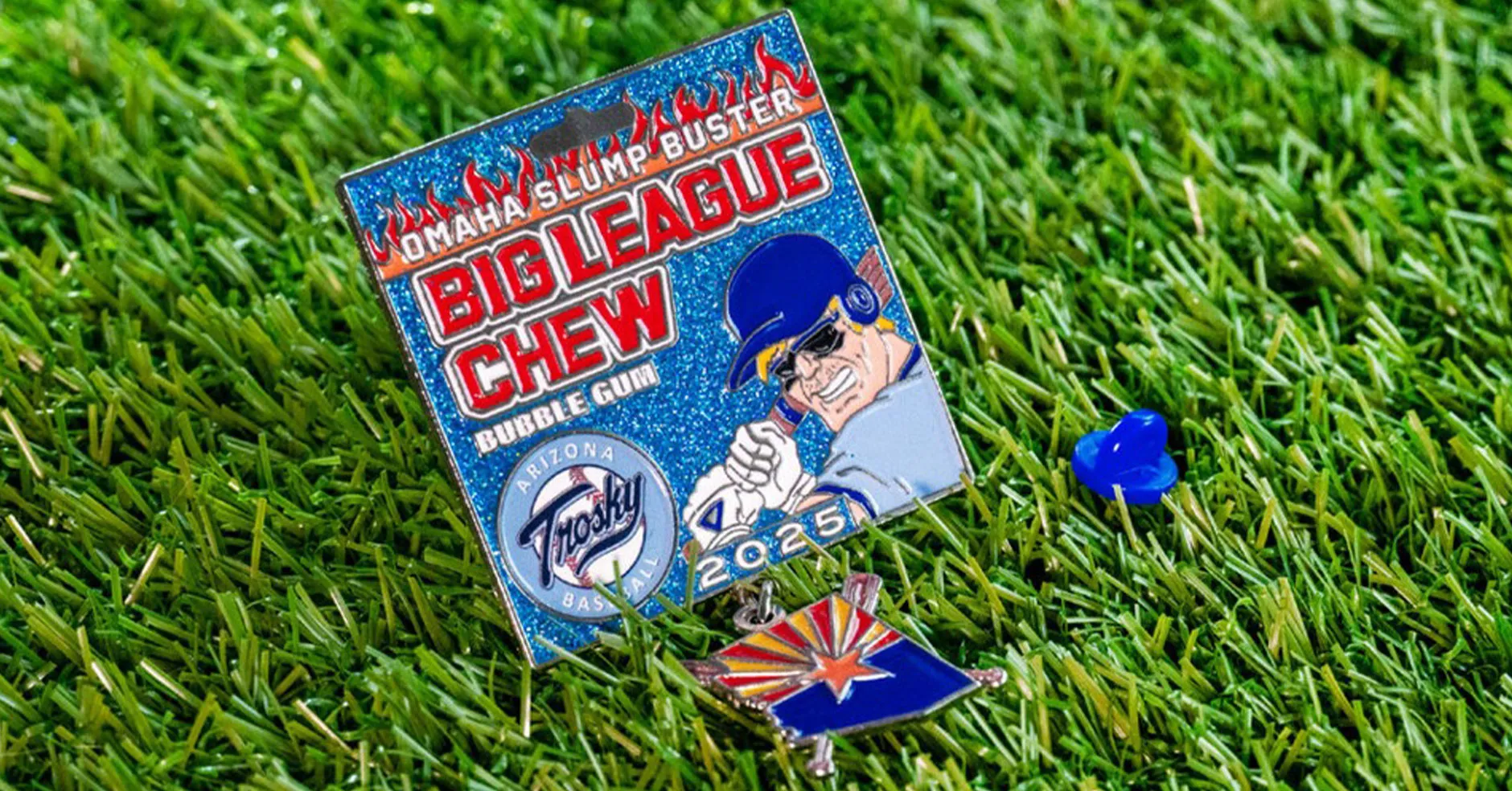
Teams design oversized pins with glitter finishes, spinning baseballs, sliders, danglers, blinking LED lights, glow-in-the-dark features, and other add-ons you probably can’t even wrap your head around. Some even include mascots that wobble or hinges that can open up. The more creative the design, the more valuable it becomes in the eyes of young traders.
Some teams even produce limited-edition pins that become highly sought after during tournaments. The FOMO is real. Before long, word spreads throughout the complex about which teams have the coolest designs, and a bizarre economy within the tournament emerges.
Suddenly, one pin might be worth three or four others in a trade. For 12-year-olds, it’s their own version of the stock market.
The Business Behind Baseball Pins
Of course, all those creative designs come with a price tag.
Custom trading pins cost anywhere from $1 to $8 each, depending on their size, quantity, and any special features (which can add up quickly). Teams order anywhere from 100 to 2000 pins depending on the tournament. For instance, an order of Cooperstown pins averages close to $ 1,500 for the team.
Sometimes the team covers the cost through player fees. Other times, each family buys a set number of pins before a big tournament.
And that’s just one small piece of the overall travel baseball budget.
Families are already paying for tournament entry fees, hotels, gas, meals, equipment, uniforms, and sometimes flights. By the time a destination tournament rolls around, pin trading is another expense, but one that most families happily budget for because they know how much the kids enjoy it.
Why Kids Love It
The funny thing is that most kids aren’t thinking about how much the pins cost. They just love trading.
Every pin represents another team, another city, and another player they’ll probably never meet again. A kid from Illinois might head home with pins from Texas, California, Florida, Georgia, and even Canada after one week in Cooperstown.
The collection becomes a scrapbook of their baseball journey. Kids share their hauls on social media and create displays for their bedroom.
Trading also gives kids an easy way to meet players from other teams. Instead of staring at their phones between games, they’re walking around introducing themselves, negotiating trades, and comparing collections. For some younger players, it’s actually one of the easiest ways to make new friends.
There aren’t many youth sports traditions that naturally encourage kids from opposing teams to interact, but pin trading does exactly that.
Parents (and Others) Get Into It Too
Parents will often joke that the pins are “for the kids.” But they’re usually just as invested.
Many spend weeks helping design their team’s pin, debating colors, shapes, slogans, and special features. Facebook groups dedicated entirely to trading pins have thousands of members who share new designs, compare manufacturers, and show off the latest creations.
It’s become a surprisingly competitive little corner of youth sports.
But it’s not just parents who get the itch. When siblings come along on the family trip, they want to get in on the fun too. More and more teams are having custom sibling pins designed. And the same goes for umpires and local businesses that want to draw in foot traffic. At some of these tournaments, everyone in town is involved in the fun.
What’s Hot in the World of Trading Pins?
Like equipment or sneaker styles, pin trends are constantly changing. Every season brings a new wave of creative designs, and players quickly figure out which pins everyone wants.
Right now, bigger is definitely better. Oversized pins with moving parts like spinning baseballs, sliding players, dangling bats, and bobblehead-style features tend to draw the biggest crowds.
Pins with glitter, translucent enamel, glow-in-the-dark finishes, or blinkers are also popular because they stand out the moment they’re clipped to a backpack or pin towel.
Limited-edition pins have become another huge trend. Some teams produce small batches of “rare pins” or special versions that aren’t available to everyone. Sometimes it’s as simple as changing the colors around, and sometimes it’s a whole new design that is bigger and better than anything else they have.
Creativity is also where teams can really stand out. All-Star Trading Pins, often cited as making some of the best baseball trading pins, work with real artists to create team designs for free. Instead of simply putting a logo on a baseball-shaped pin, they incorporate local landmarks, state outlines, mascots, nicknames, or inside jokes that represent where the team is from. They’ll parody popular candies, movie characters, and other culturally significant products. A team from Florida might feature an alligator, while a team from Texas could include a Buc-ee’s billboard. Those unique touches make the pins memorable and often serve as great conversation starters among players from different parts of the country.
A Tradition That’s Here to Stay
As travel baseball continues to grow, pin trading doesn’t seem to be slowing down anytime soon.
In fact, it’s becoming even bigger. Teams are revealing new pin designs on social media months before tournaments. Players are planning trades before they ever arrive. And the advent of AI has enabled some to experiment with all sorts of designs that would normally require Photoshop skills.
For newcomers, the whole thing can seem a little overwhelming. After all, they’re coming to watch baseball, not a collectibles convention. But spend a few days at Cooperstown or any major youth tournament, and it quickly makes sense.
Yes, the games matter. The championships matter. But somewhere between the first pitch and the closing ceremony, kids discover that some of their favorite memories happen off the field.
Sometimes all it takes is a simple question:
“Want to trade?”