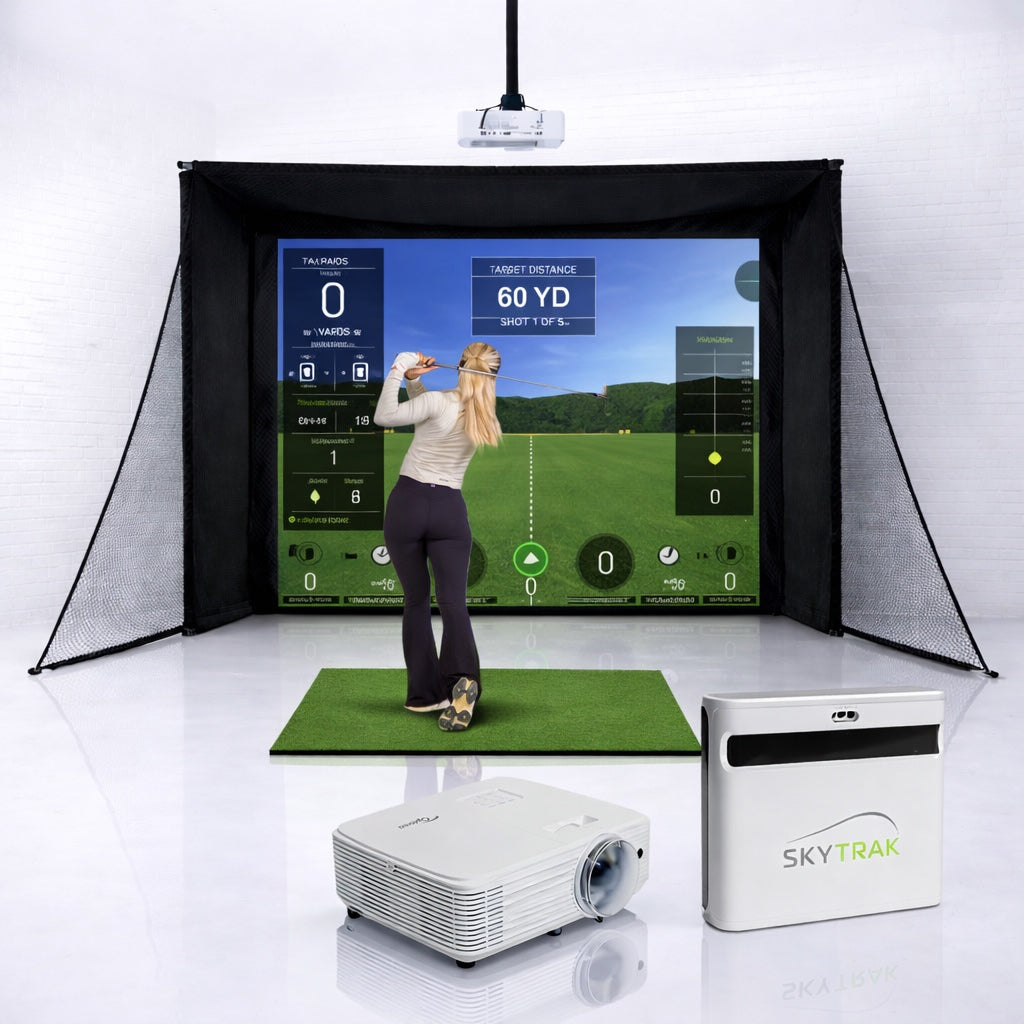

Why More Golfers Are Building Home Practice Spaces With Anchor Tech
Home practice has shifted from a “nice-to-have” to a genuine game-improvement advantage. Between unpredictable weather, busy schedules, and the cost of frequent range visits, golfers are looking for ways to practise more often without adding friction to their routines. That’s where well-designed home setups come in — especially when the equipment is built for repeated use and realistic feedback.
Anchor Tech has become a popular choice for golfers who want a dependable at-home training environment without overcomplicating the build. From full simulated golf experiences to straightforward strike sessions into a net, the brand’s approach centres on reliability, safety, and practicality — the three things that matter most once you’ve hit your first few hundred balls at home.
The Real Advantage of Practising at Home
Most golfers don’t struggle because they lack motivation. They struggle because practice is inconvenient. Driving to the range, waiting for a bay, buying balls, and hoping conditions are decent all adds up. Even a dedicated golfer can lose momentum when practice becomes a chore.
A home setup changes that completely. When practice is two steps away rather than a 30-minute drive, it becomes easier to do short, focused sessions. Ten minutes working on face control. Fifteen minutes on contact. A quick wedge ladder before dinner. Those small sessions compound quickly — and they’re often more effective than the occasional marathon range visit where fatigue creeps in and focus drops.
What Makes Anchor Tech’s Simulator Approach So Appealing
The phrase “home simulator” can mean anything from an ultra-premium dedicated room to a simple garage setup that packs away. What golfers want, regardless of budget, is a system that feels stable, repeatable, and confidence-inspiring — because confidence is what allows you to swing freely.
That’s why the build quality matters. A simulator setup should:
- Stay solid over time (no shifting frames or inconsistent tension)
- Stand up to repeated impact without becoming noisy or unpredictable
- Offer an immersive feel that makes practice enjoyable, not clinical
- Fit realistically into home spaces like garages, spare rooms, and garden rooms
A key benefit of going the simulator route is engagement. When practice is genuinely fun — whether you’re playing virtual rounds, running skills challenges, or chasing tighter dispersion — you’ll naturally do more of it. More reps, with better focus, is the simplest path to improvement.
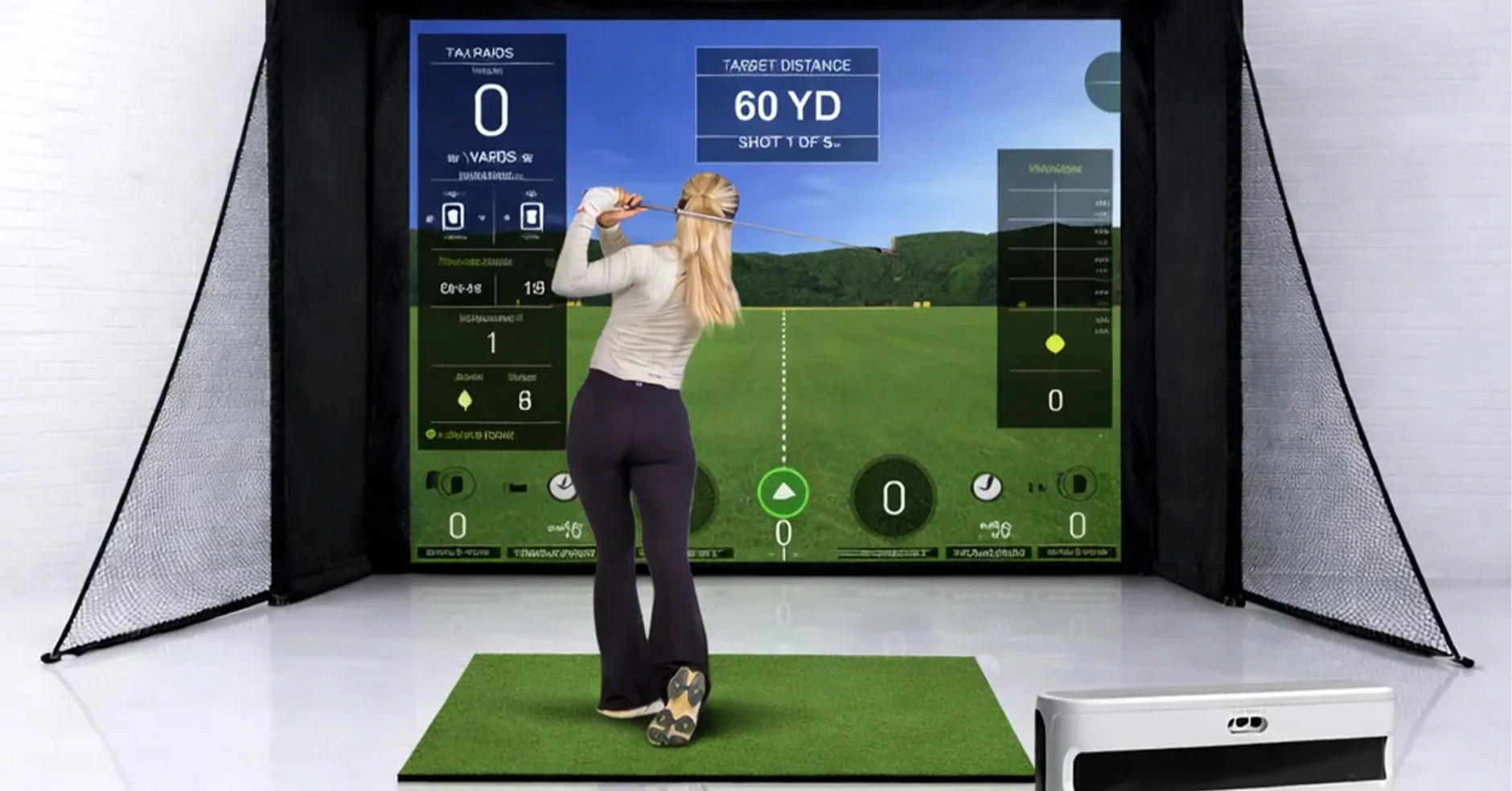
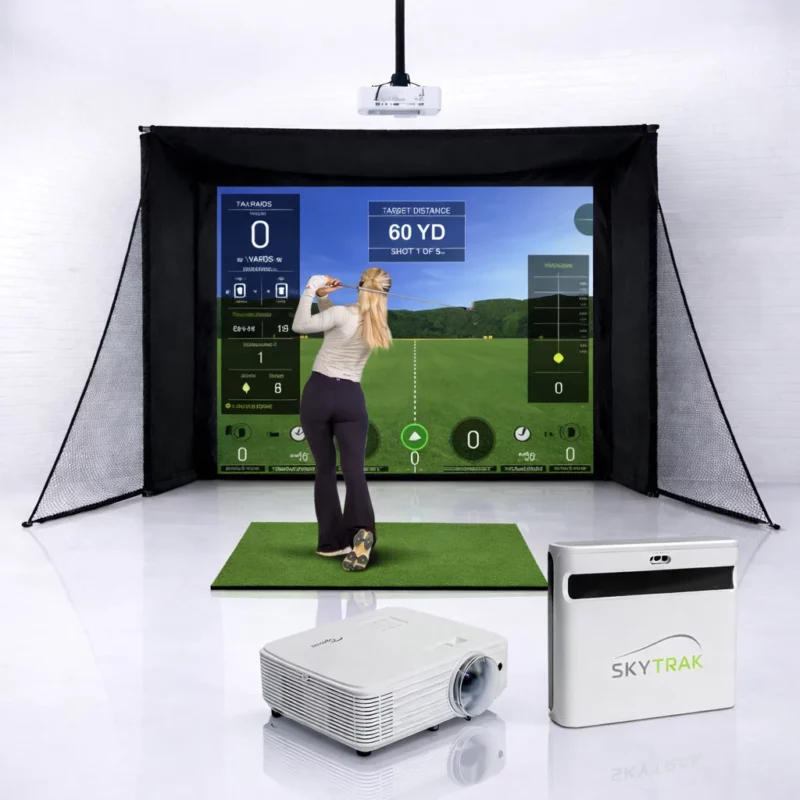
If you’re exploring that route, a well-built golf simulator can provide the structure and feedback needed to make home practice both effective and enjoyable.
Why Golf Nets Still Matter (Even If You Want a Simulator Later)
Not everyone needs a full simulator immediately. In fact, for many golfers, the smartest move is starting with the fundamentals: a safe, durable net-based practice space that makes it easy to work on strike, start line, and swing mechanics.

A good net setup is underrated. It allows you to:
- Groove consistent contact without worrying about ball flight visibility
- Train tempo and sequencing with minimal setup time
- Hit more often, especially in short windows during the week
- Practise safely in spaces where a full simulator isn’t practical yet
The best part is that a net can be the foundation for a future simulator build. Many golfers begin with a net and mat, add better lighting and space planning, then later introduce launch monitor technology and projection once they know the setup will be used regularly.
For a safe, repeatable practice station, choosing golf nets that are built for frequent impact makes a noticeable difference in day-to-day confidence.
Planning a Home Setup That You’ll Actually Use
The most common mistake golfers make is building something that looks good on day one but becomes annoying to use by week three. To avoid that, design around usability.
Prioritise Safe Swing Space
You don’t need a massive room, but you do need the confidence to swing fully without feeling cramped. Make sure you have comfortable clearance behind the ball (for your backswing) and enough width to feel relaxed, not cautious.
Make Setup Time Near-Zero
If it takes ten minutes to assemble every session, you’ll practise less. A net that stays up, a mat that stays in place, and a consistent ball position marker go a long way.
Reduce Noise and Rebound
Especially in garages or shared walls, noise matters. Tension, backing material, and how the ball is absorbed affect whether your setup feels smooth or harsh.
Add Structure to Practice
Home practice can become “just smashing drivers.” You’ll improve faster with a simple structure: 20 balls working on contact, then 20 focusing on the start line, then 10 simulated on-course shots with different clubs.
A Better Way to Practise, Without the Friction
At-home golf doesn’t need to be complicated. The best setups are the ones that feel safe, solid, and easy to step into regularly. Whether you’re building a complete simulator environment or starting with a net-based station, the right equipment makes practice more consistent — and consistency is where the real gains come from.
If you keep the focus on usability and durability, you’ll end up with something that doesn’t just look impressive, but actually gets used — week after week, season after season.